Municipalities already know how to bring water and power to every house. Broadband is the same job, as long as you design for the bad days.
Jana Sedivy, VP Customer Experience & Product, InkBridge Networks
Most municipal broadband projects begin with the observation that people in town can’t get decent internet, and nobody is coming to fix it. A community broadband network is how a town answers that, and I have a lot of respect for the people who take on the job.
InkBridge Networks has worked with two of the earliest municipal networks. The conversation with a municipal operator is rarely about revenue - it’s about residents getting online, the network staying up when the weather turns, and the local schools, clinics, and employers being able to count on it. This post is for the people responsible for those things.
A community broadband network is internet infrastructure owned or run by a local government, utility, co-operative, or nonprofit to serve its own residents.
Running a municipal broadband network is a hard job
Commercial providers go where the money is, and when companies are free to compete, that generally leads to good things. But smaller cities and rural areas rarely look profitable at first inspection, so they end up at the back of the line, sometimes indefinitely. Nobody wanted to serve your community.
So you built the network yourselves, and it worked. That’s when the same providers who passed you over turn up, wanting a piece of what you built and, in some cases, working to undermine it. Nobody likes giving up market share.
All the while, you’re running an ISP on a municipal budget, for residents who depend on it. Connectivity is not a luxury. Students do their schoolwork on it. People find and keep jobs on it. A lot of the time you can’t even book a doctor’s appointment without an internet connection. Access is starting to be seen as a human right, and the federal Broadband Equity, Access, and Deployment (BEAD) funding in the United States exists in recognition of that: the goal is to get more underserved communities connected. That’s a lot of weight for a small team and a tight budget to carry.
So why do it? Because someone in your community had a vision of doing better for the people who live there, and was willing to break new ground to get it. Municipal broadband is still young in North America. A handful of pioneers have been at it for decades, but dozens of networks have switched on only in the last few years, and the model is still contested in some states.
Doing something most of your peers haven’t done yet means there are few established practices to follow, few neighbouring towns to call for advice, and a well-funded competitor hoping you’ll stumble.
Broadband as a utility is something municipalities already understand
Municipal ISPs frame the problem differently from commercial ones. Connectivity is a service the municipality provides to residents, the same way it provides water, garbage collection, and electricity. It becomes part of running the place.
That framing is a real advantage. A municipality already makes sure that electrical wiring reaches every house, that water pipes and meters reach every house, and that every house gets garbage pickup. You know how to roll infrastructure out across a whole community and make sure every resident has the essentials. A private provider’s version of coverage is usually “check our website to see if service is available at your address.” A municipal provider’s version is “delivering this utility is our job, and we know how to deliver utilities.”
Then there’s the objection that follows any government service: it’s run by government, so it’ll be inefficient. I think that misunderstands what a municipal network is for. A city doesn’t ask whether its roads turn a profit or whether the sidewalks generate revenue. They don’t, and the city couldn’t function without them.
Nobody asks whether the sidewalks are profitable. A community broadband network belongs in the same category: infrastructure a town needs in order to work.
Being part of the community helps too. A municipal operator knows who lives there and what they need, and those needs vary from place to place. A small mountain town and a sprawling metro don’t collect garbage the same way, and they won’t deliver internet the same way either. That’s normal, and a provider that answers to its residents is well placed to get the local details right.
Design resilience into your community broadband network from day one
A community broadband network carries the same responsibility as the water system and the power grid. It has to reach every household, and it has to keep working when people need it most.
If I had to name one thing municipal operators may underestimate, it’s the need to build resilience into the network at the design stage. To be fair, that applies to any ISP. But municipal budgets are under a lot of pressure, which can create a temptation to under-resource the infrastructure.
Hardware is cheap these days, and so is memory. Our standing advice is to invest in a few more off-the-shelf machines so you can build in redundancy across your infrastructure. The goal is a network that can absorb a failure somewhere without it cascading into a failure everywhere. It’s a boring conversation when everything is running fine, and an extremely expensive one to skip when it isn’t.
More frequent extreme weather makes this more pressing. Picture a spring flood that knocks out power across half of town. Residents still need to get online, and your network has to keep providing connectivity through the flooding and the outage. In a community the commercial providers passed over, there may be nothing else to fall back on.
Redundancy also has to cover the systems residents never see. Every subscriber who connects has to be authenticated, so if your only authentication server goes down, new connections fail even though the fibre and equipment are fine.
As an example: I was impressed when I came across the Western James Bay Telecom Network in IEEE Spectrum, which is run by an Indigenous-owned nonprofit.
The network brought fibre to every home in Fort Albany First Nation in northern Ontario after the big telecom companies saw little profit in the region. Repairs are hard that far north, so the designers used passive optical splitters instead of powered equipment at every junction, and built redundancy into the backhaul to protect against fibre cuts. Local hires learned fibre splicing on the job.
Residents now use the network for telehealth, remote classes, and home businesses. The network’s finance officer called community ownership its “secret weapon”, and I suspect every municipal operator would recognise that.
Worth subscribing to.
Worth reading.
Our weekly newsletter covers network authentication tips, how-tos, security vulnerabilities, free resources, standards updates, and industry news. (All stuff you should stay up to date on!)
Reliability matters more than headline speed
Treating broadband as a utility means holding it to a utility’s standard: residents expect it to work every time, the way they expect water from the tap. The good news for a community broadband network on a tight budget is that what residents need most is a connection they can count on.
In terms of speed, satisfaction levels for most households level off once the basics are met: somewhere around 100 to 300 megabits per second of download speed, latency under 40 milliseconds, and consistent performance. Past that point, extra speed doesn’t matter much to most people. Coverage, reliability, and affordability do, and I expect latency and reliability to replace raw speed as the measures people care about.
That opens up your technology choices:
Fibre is still the gold standard for households that do a lot of streaming and gaming, but it needs heavy capital investment, long permitting timelines, and a lot of fibre, which is in short supply.
Fixed wireless needs far less capital, deploys in weeks rather than years, and can grow with demand, which is why many municipalities lean towards it.
Satellite can reach rural areas, and BEAD’s rules on whether it qualifies have shifted, but it’s hard to guarantee service, so municipalities tend to be less keen on it.
Why open source fits the municipal mandate
Every person who connects to your network has to be checked first: is this a subscriber, and what service should they get? For most ISPs, that job belongs to a RADIUS server. FreeRADIUS is an open source RADIUS server, and it’s the project InkBridge Networks maintains.
The most obvious attraction of open source software is that it’s free to use, and a municipality almost by definition doesn’t have resources to spare. Free only helps if the software holds up, though, and FreeRADIUS has proven itself on scalability and reliability. A small municipal ISP can get the same authentication engine that some of the world’s largest carriers run on.
To be transparent about how this works commercially: InkBridge makes its living from expertise, helping organisations design systems that scale and stay reliable. Plenty of ISPs, municipal and otherwise, run FreeRADIUS without paying InkBridge anything, and that’s a trade-off we’re comfortable with. Organisations that don’t need the expertise, or can’t afford it, still get the benefit of the technology. Secure networks are important to the modern world, and we want the software to stay available to everyone who needs it.
Your hardware doesn’t need to be expensive either. Some large commercial vendors require specialised, high-end, resource-intensive hardware, but it doesn’t have to be that way. FreeRADIUS runs quickly on off-the-shelf hardware, which the typical municipal budget can handle.
The trouble with the single-vendor promise
In a procurement cycle, you may hear that buying into one vendor’s whole technology stack will make your life easier: one point of contact, one relationship, everything streamlined. In practice, it rarely turns out that way. Once you’re locked in, replacing any single element becomes difficult, expensive, and sometimes impossible.
With an open source platform, interoperability is the default way of operating, which makes it a better way to build a network. That isn’t the story you’ll hear in a vendor’s slide presentation. Open source lets you build what you need instead of what a vendor sells you, and it also takes the geopolitical risk of vendor dependence off the table.
The invisible work that keeps a town connected
At InkBridge, our efforts are spent on invisible technology: the systems nobody thinks about until they stop working. Subscribers will never know which server let them onto the network this morning, and they shouldn’t have to. Like the water mains under the street, it just has to be there.
We find working with municipal networks genuinely rewarding. Open source exists to give as many people as possible access to good technology. Municipal networks exist to give every resident a connection they can count on. I’m proud InkBridge has been part of that journey for the municipal networks we‘ve worked with, and I’d like to see more communities take it on.
Planning or running a municipal network?
Whether you’re planning a community broadband network or running one that needs to be more resilient than it is today, we can help. We can help you plan redundancy that fits a municipal budget and design an authentication system that grows with your community. InkBridge Networks has 25 years of expertise. We wrote the standards, maintain FreeRADIUS, and have seen every failure mode there is. Reach out to request a quote and tell us about your network.
Related Articles
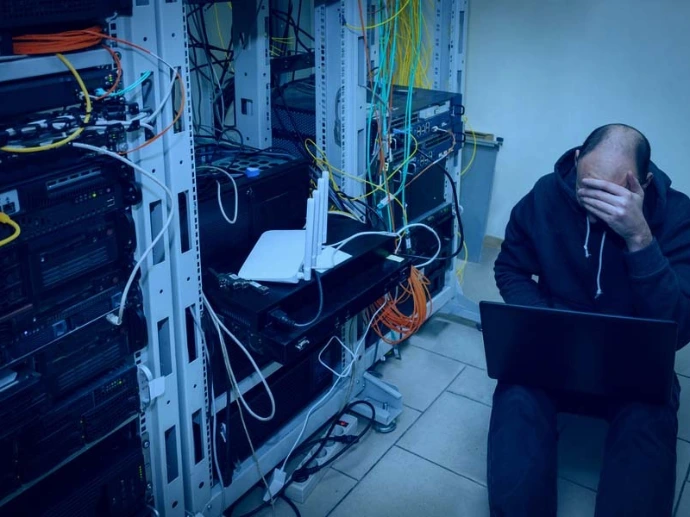
Disaster-proof your network critical infrastructure
If you live in an earthquake zone, it’s important to engineer buildings to survive an earthquake. You don’t know when an earthquake will happen, or where exactly, or how big it’s going to be, but you know that it will happen at some point during the lifetime of the building. And the consequences of not earthquake-proofing can be deadly.

RADIUS design for internet service providers (ISPs)
Afraid of FreeRADIUS? If worries about support, scalability, and security have you looking for alternatives, FreeRADIUS creator Alan DeKok explains why those fears are unfounded.